QPC Response to Godwin/Xylem Planning Application
Quenington Parish Council have submitted their response to the Godwin Xylem application to develop the site and build 47 new dwellings
Published: 13 July 2026
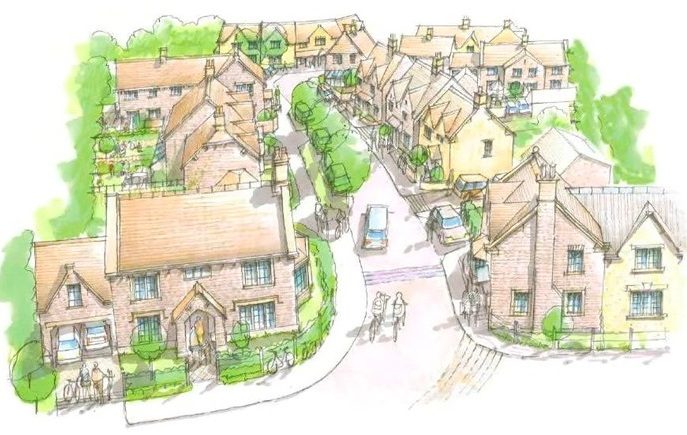
Quenington Parish Council’s response to the Godwins/Xylem planning application 26/01327/FUL to develop the site and build 47 new dwellings can be read below or downloaded as a pdf file (see end of page).
Quenington Parish Council
Response to planning application 26/01327/FUL
Response type: Neutral
Quenington Parish Council (QPC) has considered the planning application documentation, held a public meeting with residents to gather their views on the development and has had discussions with the developer at its meeting on 11th June. As a result of this, QPC has decided to submit a neutral response to this application as there are both positive aspects to the proposed redevelopment of the factory site that the council supports as well as issues in relation to the development itself and the potential impact of the development on the existing village, which QPC objects to.
This response has been structured to highlight the elements of the proposed development that QPC is supportive of, explain the areas of concern that it objects to and then outlines a set of suggestions for the future of the site.
Positives of the proposed development
As the application relates to a brown field site which is currently a factory QPC is realistic about its future particularly given pressure from the government to build new homes on brown field sites. For this reason QPC supports in principle the building of homes on the site.
The Cotswolds is an area where house prices are well above the national average (£390K v £300K nationally, Office for National Statistics[1]) but where wages are relatively low, resulting in many local people being unable to buy a home in the area – in 2025 the local house price to earnings ratio was 13.8, compared to 8.5 nationally (ONS)[2]. The current proposal to include affordable housing within the residential scheme is welcomed by the Parish Council given the difficulty that locals face in finding affordable property, but it would like more detail about (i) how the affordable housing discount will be protected to ensure these properties remain affordable long-term and (ii) how local people with a connection to the village will be identified and given priority to buy them. QPC is concerned that all the affordable housing appears to be 1- or 2- bed flats and would welcome the inclusion of houses with gardens in this offering.
QPC supports the developers’ approach of building smaller sized housing units on the site suited to the needs of first time buyers, younger families and people looking to down size. As the dwellings are modest in size this should make them more attractive to and possible for more local people to be able to buy them.
QPC feels that the developers have taken on board concerns relating to flooding issues when devising a SUDS system on the site which should reduce the amount and the rate of surface water coming off the site. Whilst this will not eliminate all the surface water flooding in the village it will help to mitigate it.
QPC welcomes the increase in Biodiversity Net Gain as a result of decreasing the amount of hard-standing and the inclusion of green space within the development. QPC also supports the inclusion of swift bricks, bat boxes and hedgehog highways which the developers have included to comply with QPC’s biodiversity policy.
QPC also welcomes the inclusion of visitor parking spaces within the development as there is very limited parking for cars in the village but would welcome the addition of EV charging points at these locations to support the increasing use of EVs.
QPC welcomes the focus on smaller 2-, 3- & 4-bed houses, which will address the needs of a wider family-orientated home seeking market, rather than the provision of fewer, larger and more expensive executive homes.
Aspects of the proposal that concern QPC.
Concerns regarding the site itself
In the view of QPC and the residents, the proposed development of 47 properties in a village currently comprising 221 dwellings is over development and will significantly change the village.
Whilst there is support in principle from QPC and residents for housing on the site, the scale of the development seems out of proportion in Quenington as it will result in a 21% increase in the number of dwellings in a very short period of time. This will have a significant impact on the make-up of the village, both its housing and its population structure. QPC is concerned that the village will struggle to support such a rapid expansion particularly as there will be limited additional funding available to the parish council for this. There is also concern about the density of the housing on the site even if the proposed density meets the required standards.
The planning application includes 8 affordable housing units which are all flats. While the addition of affordable housing is welcomed, QPC has concerns about the suitability of flats for young families particularly as these properties do not appear to have any garden space. QPC would like the developers to consider the inclusion of some of the houses with gardens in the affordable home offering.
Whilst QPC supports the concept of affordable housing it would like to see details of the arrangements for this as it wants reassurance that the affordable housing discount and the requirement that potential buyers have a strong connection with the village will remain in place permanently.
The Parish Council would like to see more commitment to ecological and sustainable development within the plans. The Cotswold Design Code (items D59-D62) highlights the need for this and the potential of it to deal with the impacts of climate change. Whilst the plans show that homes on the site will have heat pumps and EV chargers the plans do not include the installation of solar panels and battery storage systems. The Parish Council would like to see solar panels on all roofs, and battery storage systems in every dwelling on the site. These types of technologies would help to future proof the development and to reduce the impact of the development on an already overburdened rural infrastructure. The Cotswold Design Code (item D60) states that “sustainable design needs to be considered at the outset of developing plans”. Although not currently a requirement on new builds, the Government’s recent “The Future Homes and Buildings Standards: 2023 consultation on changes to Part 6, Part L (conservation of fuel and power) and Part F (ventilation) of the Building Regulations 2010”[3] indicates support for the installation of solar panels on all new builds. QPC believes that not including solar panels and battery storage is a missed opportunity to make the dwellings as eco-friendly and self-sufficient in energy as possible and would put the scheme ahead of future building regulations. In addition, Quenington and surrounding villages regularly suffer power outages in the winter months and the inclusion of solar and battery back-up will help these new homes mitigate the impact of any outages. In addition to the environmental benefits of solar panels and/or other green energy sources, QPC would like to highlight that the village is not on the mains gas supply so most homes are heated by oil or LPG, both of which are considerably more expensive than mains gas. This means that any residents in this new development who struggle with electricity costs will find it difficult to find cheaper alternative energy sources, even without the added cost of retrofitting a suitable fossil-fuel boiler. As such, the inclusion of solar panels and battery storage could be very attractive to buyers.
Car parking is a current problem within the village with many houses having no off-street parking and village roads are becoming increasingly congested with parked cars. The plans for the site show 87 allocated parking spaces for residents plus garages for specific dwellings. Given the rural nature of the site, and the lack of public transport, most flats will likely require a minimum of two cars, while houses will typically require more. Whilst the application states that the allocation of car parking spaces meets minimum required standards, QPC has concerns that this is insufficient for a rural location which will ultimately lead to antisocial/unsafe parking, and only further exacerbate the existing parking issues in the village.
The developers have confirmed in a letter to QPC that the roads and paths will not be adopted by Highways, but will be managed by a Management Company. QPC require a clear and comprehensive plan for the long-term management of the roads within the development by the Management Company to ensure their continued upkeep and maintenance.
In their letter, the developers also confirmed that the common green spaces, trees, raingardens, landscaped verges and areas, the SUDS pond and SUDS features within the development will be privately owned by the residents and that these will be maintained and managed by a Management Company. While QPC supports the inclusion of areas that improve biodiversity (as outlined in the council’s own Biodiversity Policy), the council is concerned that there is a lack of detail about how these assets will be managed in the planning application. The Cotswold Design Code (item D66) highlights the need for a plan to be provided which sets out who will manage the green infrastructure and landscape provision. QPC would like this clarifying as the amenity value and benefit to wildlife of these green spaces will only be achieved if it is carefully maintained. QPC request that a management plan and on-going agreement is put in place as part of the approval process to ensure the long-term maintenance of the green spaces is secured.
Quenington residents are currently served by a limited public bus-service operating from the bus stop near the junction of Church Road and Fairford Road. Local children attending the closest secondary school in Fairford also get the bus to school from this stop. Although the bus stop is only a few minutes walk from the proposed development, the route to it is mostly unpaved, which means bus passengers have to either walk along the grass verges, which are often wet, muddy and slippery in winter, or walk in the road, which is poorly lit. If this development goes ahead, there will be more children relying on the bus to get to school every day, therefore as part of the planning permission, QPC would like to see the installation of a suitable pavement / footpath to allow school children and other users of the bus to get to the bus stop safely. This would align with the Cotswold Design Code (item D66) which states that:
“High quality, well integrated and carefully designed green infrastructure (GI) and landscape provision is crucial to the long-term success of developments […] and the connections between a new development and the existing townscape or landscape, are equally important to the design of the structures themselves.”
… and specifically with Item D66i that states:
“The on-site GI should be designed to ensure that it links physically with off-site GI to maximise opportunities for ecological connections, footpath and cycle links, continuity of landscape features, etc”
Although Quenington is not part of a dark-skies area, it does benefit from relatively low light pollution and as such QPC has concerns that such a large development could lead to excessive light pollution. Therefore, it would like assurances that lighting within the development will be designed to minimise light pollution.
As the site has been used by an engineering company to manufacture products there is the possibility of soil and ground water contamination on the site. There is also a risk that the process of demolition of the factory could cause further contamination on site, as an example we know that the factory roof contains asbestos. As there is no construction plan included in the planning application documentation it is not clear how the site will be prepared for construction and how any contamination will be dealt with or avoided. QPC have been advised by the developers that demolition and construction management plans would be put in place before works start, however, QPC require such plans to be established at the earliest point and that these include information about how construction traffic will be managed to minimise disruption to residents in the village. QPC is willing to use its local knowledge to aid with the production of this plan.
Infrastructure concerns
Whilst decisions about approval of a planning application will tend to concentrate on matters specifically related to the site, QPC is responding with a more holistic view of the proposal and its impact on the village as a whole. QPC would like to highlight its concerns about the fragility of the infrastructure that supports the village as a whole and the negative consequences that more housing will have on it. The poor infrastructure is already making it difficult for residents to live in the village and has resulted in some residents making the decision to move away. QPC believes that improvements to the infrastructure needs to take place first before more housing is approved to be built to ensure that residents have the services that they need and are entitled to.
Electrical supply
The electricity power supply to local villages in the area is under strain and there is insufficient capacity in the current supply infrastructure to allow every household to transition to green technologies (e.g. heat pumps and EV chargers). The proposed housing development includes these technologies but without any technology to make and store electricity. QPC is supportive of the transition to green energy but is concerned that once these additional houses are built the power supply to the village will be pushed beyond its capacity and will, at best become less reliable or fail or require major upgrades to the existing supply.
Freshwater supply
Recently a new water supply pipe was installed across land in the parish to provide additional fresh water to Fairford. As the number of residents in Fairford has grown rapidly in the last few years, and the local plan proposes considerable further expansion, more housing in Quenington village will add to the increase in demand for water. QPC is concerned that an increasing demand for water coupled with the predicted impact of climate change could adversely impact on water supplies to Quenington.
Sewage and wastewater
Quenington regularly experiences episodes of flooding leading to sewage polluting homes in the village and sewage being discharged into the river Coln. The sewer system is old and inadequate for the current needs of the village. Whilst the developers of the current planning application have discussed these issues with QPC and incorporated measures to mitigate surface water runoff from the site, there will still be extra sewage and waste water from the 47 properties being put into the foul water sewers. Recently the village sewers have had to accommodate additional sewage and waste water as a result of the relocation of up to fifty staff to the new Ernest Cook Trust headquarters in Quenington a year ago. QPC is meeting regularly with Thames Water to try to resolve the current problems but with limited success. The use of mobile sewage tankers to remove excess sewage only offers a temporary solution to the problem. As Thames Water has a statutory duty to connect new houses to the water and sewage systems it will do so even if the system cannot cope. The current issues with sewage need to be resolved before any new houses are built. In addition to this, sewage from Quenington is pumped to Fairford, who have their own issues with sewage and flooding, for processing. With the recent increases in housing in Fairford and with further large increases being proposed, QPC is concerned that this is only going to add to the issues currently being suffered by Quenington residents.
Roads and public transport
Quenington is a rural village served by five country roads all of which are lower than B-class roads. None of the roads are lit (being mainly country roads) and most are suffering with surface deterioration and potholes. This makes commuting a problem, especially in winter when the lack of gritting adds to the issues faced by drivers. Increasing the number of houses in the village will mean more traffic on these small rural roads potentially leading to more accidents on them. As mentioned previously, there is limited public transport in the village which means it is very difficult for residents to live in the village unless they have access to a car.
Schools, medical services, and other daily requirements
The nearest primary school is in Hatherop (which is a mile away from Quenington) and is full, with no possibility of expansion to accommodate additional children due to the small size of the site the school is situated on. With Hatherop school currently oversubscribed and with other local schools approaching capacity it is increasingly difficult to meet the demand for local school places. If the new development is approved there will be more children in the village which will add to the pressure for local school places.
The nearest doctor’s surgery and dentist practice to Quenington are in Fairford. Currently residents report difficulty accessing medical services and QPC is concerned that more housing in Quenington coupled with the proposed increase in housing numbers in Fairford will put more pressure on these facilities.
Quenington has no shop, but there is a small community convenience store and post office about a twenty minute walk from the village, which offers a limited range of products. Alternatively, residents must travel to Fairford, Cirencester or Swindon to access a wider range of services and amenities, and with virtually no public transport this is impossible without a car. The anticipated increase in numbers of residents following this development will lead to a significant increase in traffic movements in and out of the village, both commuting to work and travelling to local amenities (shops etc) which will impact roads as highlighted above.
Connectivity
Gigaclear have just finished installing a fibre optic broadband network in the village offering the option for fibre to the property in place of the current fibre to the cabinet. This has improved broadband for domestic users and those residents running businesses from home; however Quenington still has virtually no mobile phone signal coverage in the village which causes daily issues for residents, local businesses and travellers. The lack of mobile signal means that many residents are unable to rely on smart meters and those with electric vehicles are unable to access suitable electricity tariffs as these require the use of a smart meter. This problem has discouraged many existing residents from taking up green technologies such as buying electric cars and will impact any new residents moving into this new estate. Residents must rely on wifi calling to use their mobile phones and have no signal away from their home in the village. Residents have raised concerns about the difficulty the emergency services and delivery drivers face when trying to find a location in or around the village due to the lack of mobile signal.
Suggestions to improve the application.
QPC and residents have concerns that the number of houses in the proposal is overdevelopment in a small village. As such QPC suggests that a reduction in the number of houses is considered. In addition, there is a problem with parking in the village so QPC suggests that the number of residents parking spaces on the site is addressed to reflect the reliance on cars by residents in a rural village.
Conditions of approval
If Cotswold District Council approves this application QPC would like the following conditions to be set as part of the approval.
- A robust and durable affordable housing discount is put in place to ensure the affordable housing remains affordable and the sales discount is maintained in perpetuity.
- A robust and transparent scheme is produced to ensure buyers of affordable housing have a strong connection to the village or if not work locally; we suggest locally is defined as working within 10 miles of the village. QPC requests that it is involved in the production of this scheme.
- All properties are fitted with solar panels and battery storage systems to ensure they are as energy self-sufficient as possible
- Confirmation that a management company will be established to manage the roads, paths, trees, raingardens, landscaped verges and areas, the SUDS pond and SUDS features and green spaces within the development.
- That a detailed Construction Plan for the site is provided that covers how contamination discovered on site or arising from the preparation of the site for building will be managed to protect the health and safety of existing residents and people moving into homes on the site.
- That a Construction Traffic Management Plan is produced to minimise the disruption caused to residents and road users.
- A footpath to connect the bus stop with the development is install which is wide enough to cater for pedestrians and wheel chair users.
- That lighting on the site is designed to minimise light pollution and not impact neighbouring residents and wildlife.
- That the installation of swift bricks, bat boxes and hedgehog highways as highlighted in the proposal plans is made mandated.
- That Thames Water provides a fully funded plan with agreed time scales detailing how they will improve the foul water drainage system in Quenington before any more houses are connected to the network.
One final request
QPC currently has a precept of £25,657 and a small amount of additional income from its cemetery. As a small village the cost of establishing a Neighbourhood Development Plan is prohibitive so we do not have one. As a consequence, if this planning application is approved QPC will only be eligible to receive 15% of any CIL funding rather than the 25% it would be entitled to if it had a Neighbourhood Development Plan in place. QPC requests that CDC provides the full 25% of the CIL funding. This would allow the council to fund projects to support a much larger population, as the result of a 21% increase in dwellings, without having to significantly raise its precept with the added financial burden that will place on existing residents as well as residents in the new estate.
[1] https://www.ons.gov.uk/visualisations/housingpriceslocal/E07000079/
[2] https://www.ons.gov.uk/peoplepopulationandcommunity/housing/articles/howaffordablearehomesinyourneighbourhood/2026-03-26
[3] Future_Homes_and_Buildings_Standards_Consultation_Response.pdf